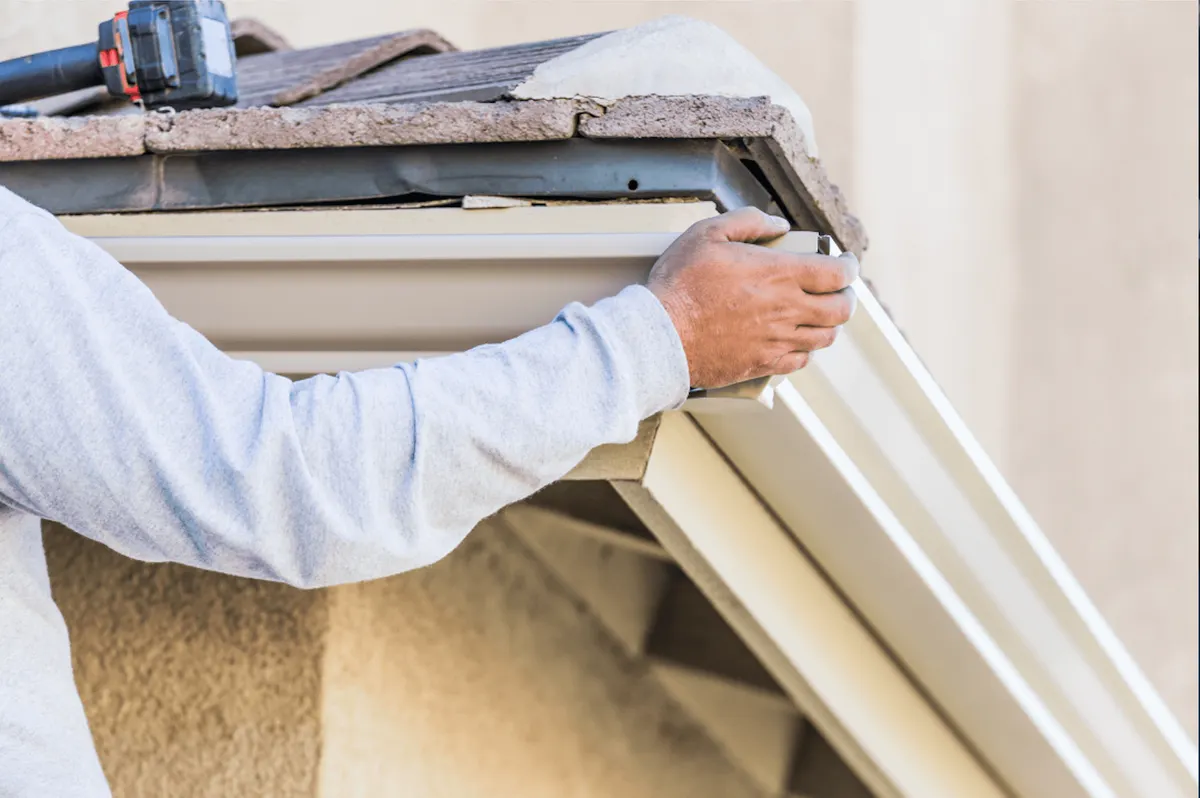
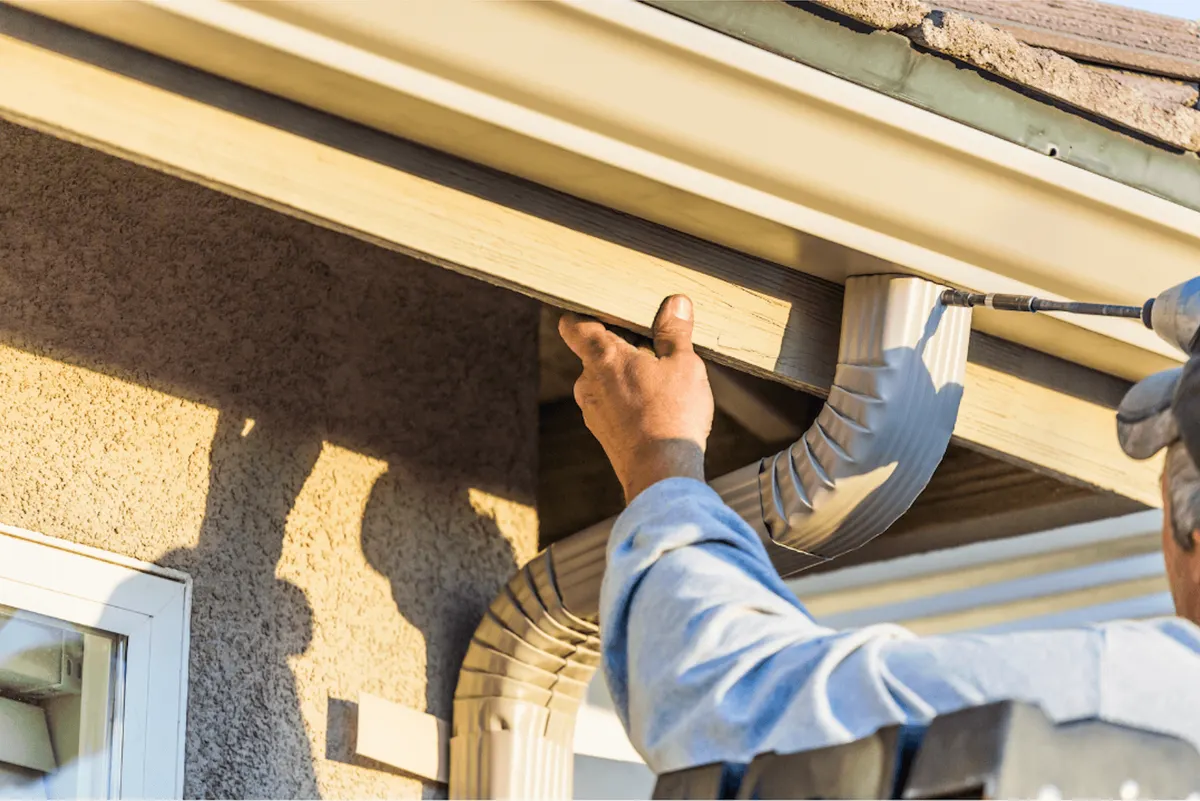
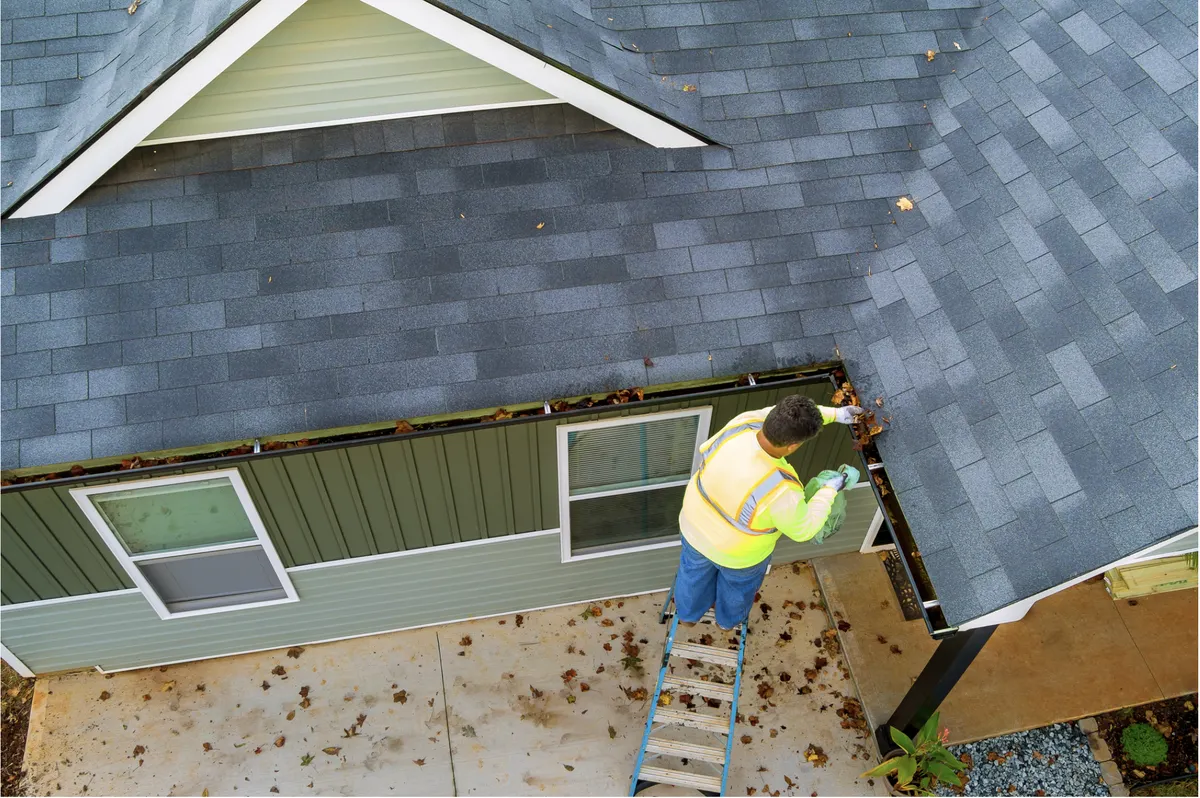
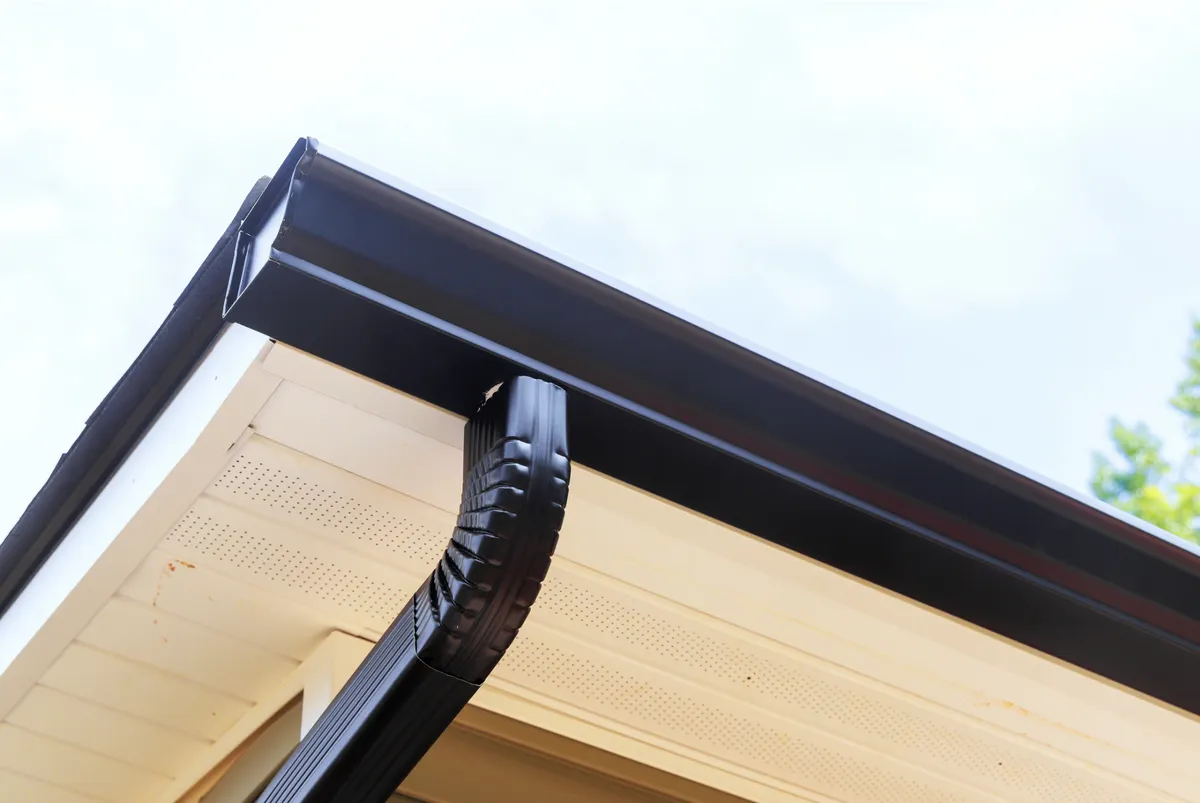
Full-system gutter replacement for Murfreesboro homes approaching or past the first replacement cycle. Old system removal, fascia inspection, and professional seamless gutter installation in a single project.
The average Murfreesboro home was built in 1999. That puts the oldest wave of the city's modern housing stock at 25-plus years old — and the builder-grade gutters installed during that construction boom at or past the end of their functional lifespan. Homes built between 2000 and 2010, which represent the largest segment of Murfreesboro's 175,000-plus population, are now 15 to 25 years old and entering the replacement window.
Builder-grade gutter systems were designed to minimize construction costs, not to endure decades of Middle Tennessee's demanding conditions. Thin-gauge aluminum, sectional connections with sealant-dependent joints, and wide hanger spacing at 36 inches or more were standard practice during the building boom. After 15 to 25 years of 52-inch annual rainfall, Dixie Alley storm loads, persistent debris from Eastern Red Cedar and oak-hickory forests, and the thermal cycling of a humid subtropical climate, these systems show predictable failure patterns: sagging channels, leaking joints, gutters pulling away from fascia boards, and water intrusion behind the gutter line that damages the fascia itself.
Gutter replacement addresses these failures at the system level rather than chasing individual problems with patchwork repairs. The old system comes off entirely, the fascia is inspected and repaired where needed, and a new seamless gutter system is fabricated on-site and installed to current professional standards.
Not every gutter problem requires a full replacement. A single loose hanger, a localized leak, or a dented section from storm debris can be repaired without disturbing the rest of the system. Replacement becomes the right call when failures are systemic — when the problems are symptoms of an aging system rather than isolated incidents.
Free estimates including old system removal, fascia inspection, and new seamless installation.
The gutter system that came with most Murfreesboro homes built between 1995 and 2015 was a cost-driven decision made by the builder, not a performance-driven decision made by the homeowner. Builder-grade installations share common characteristics: thin-gauge aluminum (typically .019" to .025"), sectional construction with joints every 10 to 20 feet, spike-and-ferrule hangers or wide-spaced hidden hangers at 36 inches, and limited color selection — usually white or brown regardless of the home's exterior palette.
Professional-grade replacement systems address every one of those limitations. Heavier-gauge aluminum at .027" to .032" resists denting from hail and branch impacts. Seamless fabrication eliminates leak-prone joints. Hidden hangers spaced at 24 inches or less provide consistent support that prevents sagging under the load of 52 inches of annual rainfall and heavy debris. And on-site fabrication from 30-plus color options allows the gutter system to complement the home's siding, brick, and trim rather than defaulting to the builder's bulk-order color.
The upgrade from builder-grade to professional-grade is the primary value proposition of gutter replacement. The homeowner is not simply reinstalling what failed — the homeowner is installing the system that should have been there from the start.
One of the most important aspects of gutter replacement has nothing to do with the gutters themselves. When the old system is removed, the fascia boards are fully exposed — often for the first time since the home was built. In Murfreesboro's humid subtropical climate, what those fascia boards reveal can range from minor cosmetic wear to significant structural damage that has been hidden for years.
Water that leaks from failed joints or overflows behind the gutter channel does not evaporate quickly in Middle Tennessee's humidity. It saturates the fascia board, and over months and years, that sustained moisture leads to wood rot, mold growth, and softening of the structural lumber. Insect activity — particularly carpenter ants and termites common in Rutherford County — can compound the damage in compromised wood.
Fascia inspection during gutter replacement is not optional. Mounting a new gutter system on compromised fascia boards guarantees premature failure — hangers pull free from soft wood, the gutter loses slope as damaged sections flex, and water intrusion continues behind the new system. Addressing fascia damage during the replacement project costs $6 to $12 per linear foot for the affected sections and is far less expensive than returning for a separate fascia repair after the new gutters have already been installed.
Most builder-grade gutter systems in Murfreesboro used 5-inch K-style channels. For a single-story home with moderate roof pitch and limited tree cover, a properly installed 5-inch system can manage normal rainfall events. But "normal" is a generous term for Middle Tennessee weather. Summer thunderstorms routinely deliver 2 or more inches of rain per hour, Dixie Alley severe weather events push rainfall intensity higher still, and the combination of steep roof pitches and large roof surfaces on many newer Murfreesboro homes concentrates water flow beyond what a 5-inch channel was designed to handle.
Gutter replacement presents the ideal opportunity to upgrade to 6-inch channels. Since the fascia is already exposed and the old mounting hardware is being removed, the labor cost difference between installing 5-inch and 6-inch gutters is minimal. The material cost difference runs roughly $3 to $5 per linear foot. In exchange, the homeowner gets approximately 40 percent more water-carrying capacity — a meaningful safety margin that reduces overflow, limits fascia exposure to splash-back, and extends the interval between cleanings by accommodating more debris before performance degrades.
For two-story homes, properties with roof areas exceeding 2,500 square feet, and lots surrounded by Eastern Red Cedar or oak-hickory canopy, the 6-inch upgrade is the standard recommendation during any replacement project.
Gutter replacement begins with complete removal of the existing system. Every channel, downspout, elbow, hanger, bracket, spike, ferrule, and piece of mounting hardware is taken down. Sealant residue, caulk, and adhesive left on the fascia from the old installation are cleaned to provide a fresh mounting surface for the new system.
All removed materials are collected and hauled away as part of the replacement project. Aluminum is separated for recycling where facilities are available. No debris from the old system is left on the property, and landscaping along the dripline is protected during the removal process.
The removal phase also serves as the first stage of fascia inspection. With the old gutters off and the mounting surface exposed, every linear foot of fascia can be examined for moisture damage, rot, insect activity, and structural integrity before any new hardware goes up. This is the only opportunity to identify and address hidden fascia problems without removing a functioning gutter system — making replacement day the most cost-effective time to catch and fix these issues.
Replacement pricing includes old system removal, disposal, fascia inspection, and new seamless gutter installation. All estimates are free.
| Service Component | Price Range | Notes |
|---|---|---|
| Full Replacement (5" Seamless Aluminum) | $10 – $15/LF | Includes removal, disposal, and new installation |
| Full Replacement (6" Seamless Aluminum) | $13 – $18/LF | Recommended upgrade for high-volume properties |
| Fascia Board Replacement | $6 – $12/LF | Per affected section; identified during inspection |
| Whole-Home Project (150–200 LF) | $1,500 – $3,500 | Standard aluminum replacement, complete service |
| Two-Story Premium Replacement | $2,500 – $5,000 | Additional access requirements; 6" channel upgrade |
Pricing varies by project scope, building height, fascia condition, and channel size. Rutherford County requires a Home Improvement License for projects between $3,000 and $25,000. Contact Murfreesboro Gutter Pros for a free, detailed estimate.
Free inspection and honest assessment for every Rutherford County property.
Gutters should be replaced rather than repaired when they show systemic failure across multiple sections. Signs include sagging that persists after hanger tightening, gutters pulling away from the fascia board, visible rust or corrosion on steel systems, multiple leaking joints in sectional installations, peeling or flaking paint indicating coating failure, and water pooling behind the gutter against the fascia. If repairs would affect more than 30 to 40 percent of the total system, full replacement is typically more cost-effective. For Murfreesboro homes built around the average construction year of 1999, gutters are now 25-plus years old and approaching or past the typical lifespan of builder-grade systems.
A complete gutter replacement on a standard single-story Murfreesboro home typically takes one day, including removal of the old system, fascia inspection, and installation of the new seamless channels. Two-story homes and properties with complex rooflines or extensive fascia repair needs may require a day and a half to two days. The old system is removed first, all fascia boards are inspected for moisture damage or rot, necessary repairs are completed, and the new seamless gutters are fabricated on-site and installed the same day.
The old gutter system is fully removed, including all channels, downspouts, hangers, brackets, and hardware. All materials are collected and hauled away as part of the replacement service. Aluminum gutters are recycled where possible. Any remaining sealant, caulk, or adhesive residue on the fascia is cleaned before the new system is installed. The removal process also provides the opportunity to inspect the fascia boards for hidden damage that was concealed behind the old gutters.
Gutter replacement in Murfreesboro runs $10 to $15 per linear foot, which includes removal of the old system, disposal, fascia inspection, and installation of new seamless aluminum gutters. A whole-home replacement for a typical Murfreesboro home with 150 to 200 linear feet of gutter runs $1,500 to $3,500 depending on building height, roof complexity, fascia repair needs, and whether the homeowner upgrades from 5-inch to 6-inch channels. Fascia board replacement, if needed, adds $6 to $12 per linear foot for the affected sections.
Upgrading from 5-inch to 6-inch gutters during replacement is recommended for most Murfreesboro properties, especially two-story homes, steep-pitch roofs, and lots with heavy tree canopy. The 6-inch channel increases water-carrying capacity by approximately 40 percent, which provides a meaningful safety margin during the intense rainfall events that accompany Middle Tennessee's summer thunderstorms and Dixie Alley severe weather. Since the fascia is already exposed during replacement, the labor cost to install 6-inch channels instead of 5-inch is minimal — the primary difference is material cost, typically $3 to $5 more per linear foot.
Yes, fascia inspection and repair are a standard part of the gutter replacement process. When the old gutters are removed, the fascia boards are fully exposed for the first time in years — sometimes decades. Water damage, rot, insect damage, and structural deterioration that were hidden behind the old system can be identified and addressed before the new gutters are mounted. Fascia board replacement typically costs $6 to $12 per linear foot for the affected sections. Addressing fascia issues during gutter replacement prevents the new system from being mounted on compromised wood, which would lead to premature failure of the new installation.
Complete gutter replacement with free estimates, old system removal, fascia inspection, and transparent pricing for every Murfreesboro and Middle Tennessee property.
Call For Free Estimate